
ENG
ENG

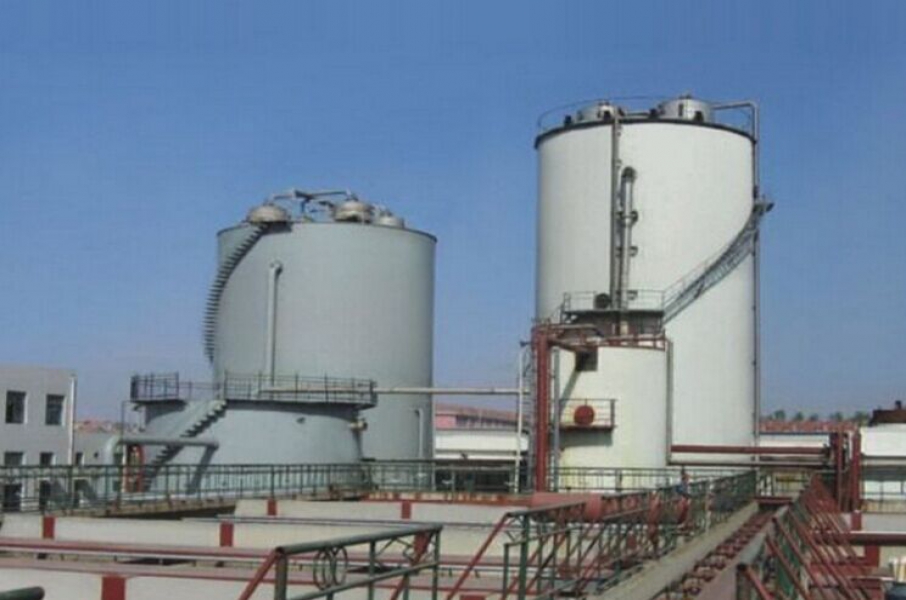
[Introduction]: IC Internal Circulation Anaerobic Reactor The IC anaerobic reactor is a new type of anaerobic reactor developed after the UASB and EGSB. It ha
IC anaerobic reactor UASB A new type of anaerobic reactor after EGSB has the characteristics of high volumetric load, strong shock load resistance, good effluent stability, large gas production, low sludge volume, low operating costs, and significant economic benefits, making it particularly suitable for medium to high concentration wastewater treatment projects.
The IC anaerobic reactor is divided into two chambers by upper and lower gas collection hoods. The two chambers are combined by an internal circulation device, and most of the organic matter entering the IC anaerobic reactor is digested in the lower reaction chamber. The generated biogas is blocked by the lower gas collection hood and enters the riser. Due to the density difference between the liquid inside and outside the riser, the fermentation liquid is continuously lifted to the gas-liquid separator. After separating the biogas, it flows back to the lower reaction chamber, forming a continuous circulation of the fermentation liquid.
Given that the internal circulation occurs in the lower reaction chamber, there is a high hydraulic load in the lower reaction chamber. The high hydraulic load and high gas production load allow the sludge to be fully mixed with organic matter, resulting in a fully expanded state of the mixture and a high mass transfer rate, greatly improving the anaerobic digestion rate and organic load.
The upper reaction chamber is the low load zone of the reactor, which only digests a small amount of organic matter that cannot be digested in time in the lower reaction chamber. The biogas production is low, the gas production load is low, and the internal circulation does not enter the upper reaction chamber. The lower gas production load and hydraulic load in the upper reaction chamber are conducive to the settling and retention of sludge, thereby maintaining a high sludge concentration in the reactor.
Due to the fact that the anaerobic digestion rate depends on sludge concentration and mass transfer rate, the factors affecting mass transfer are gas production load and hydraulic load, which are important factors in enhancing mass transfer and the fundamental cause of sludge loss. Due to the internal circulation device, the IC anaerobic reactor changes the direction of gas production load and hydraulic load, which can avoid the disappearance of sludge under high load and achieve a certain degree of separation between high load and sludge loss, thus making the IC anaerobic reactor have a higher organic load than UASB and EGSB.
Application features: High COD load (15-25kg CODcr/m3/d)
Compact structure, saving floor space
Borrowing biogas to enhance internal circulation without the need for external power
Strong resistance to impact loads and the ability to buffer pH
Good effluent stability, high reliability, low infrastructure investment
The UASB reactor is equipped with a three-phase separator for gas, solid, and liquid at the top. The
 0535-6350765